
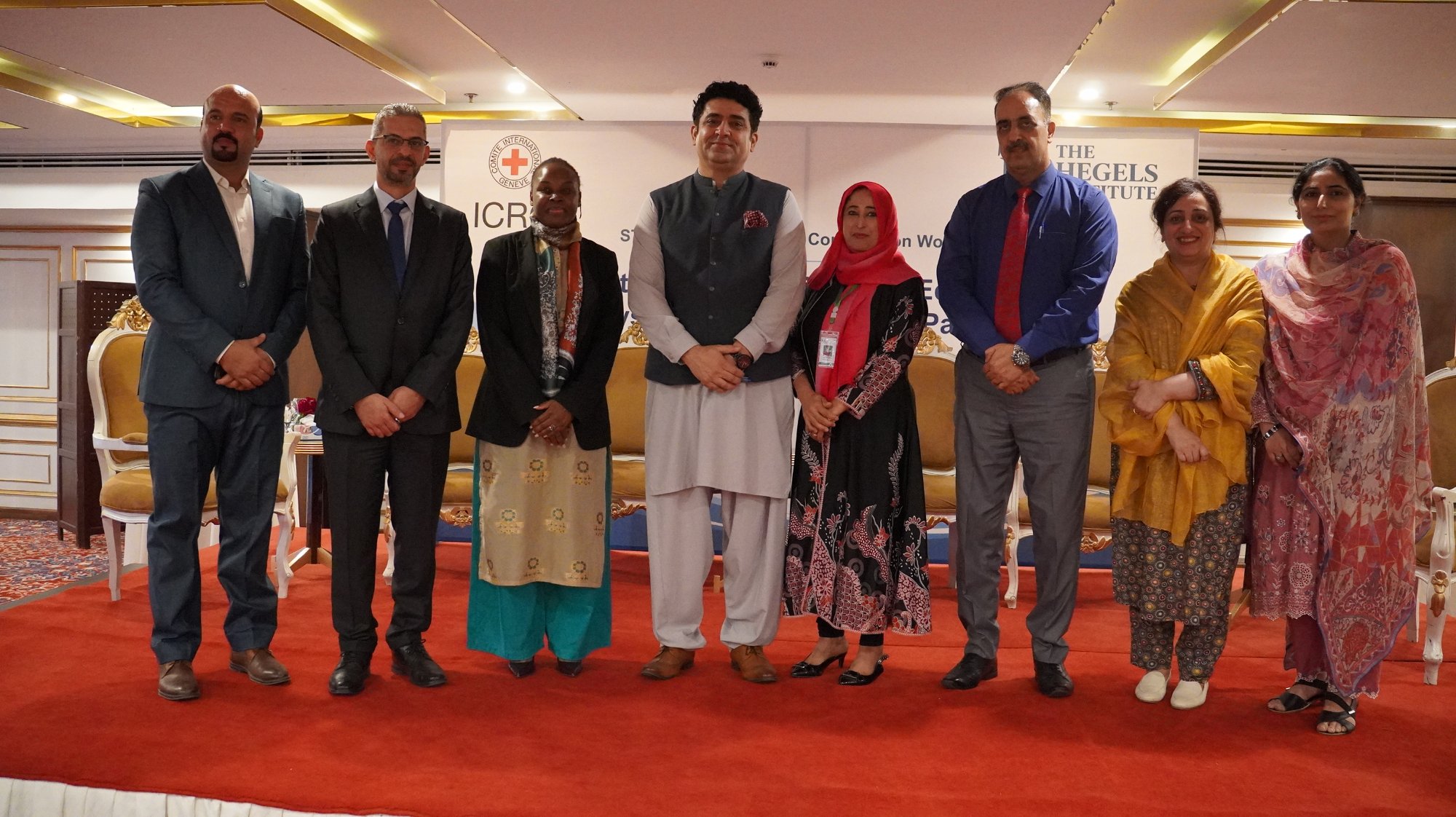
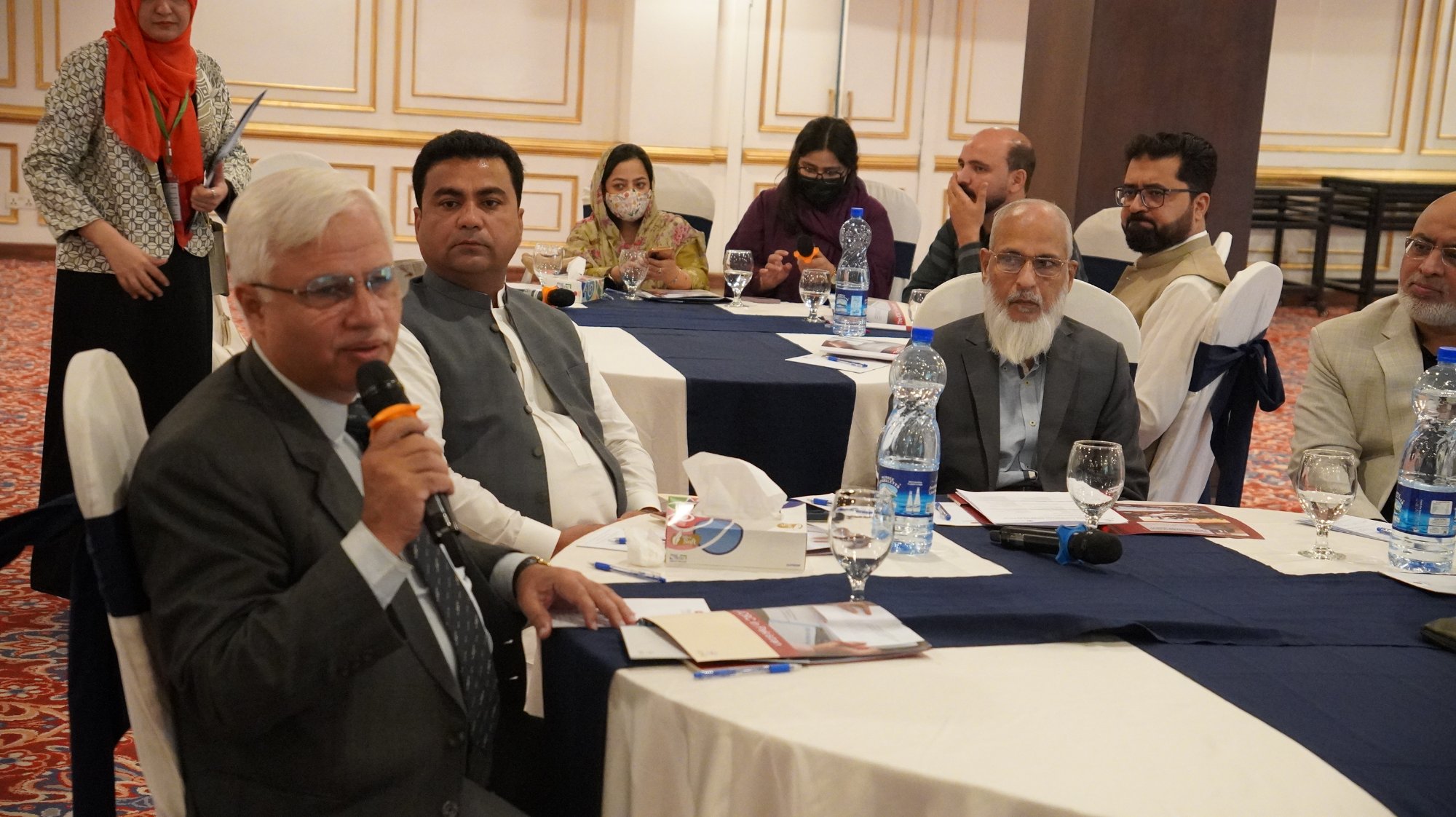
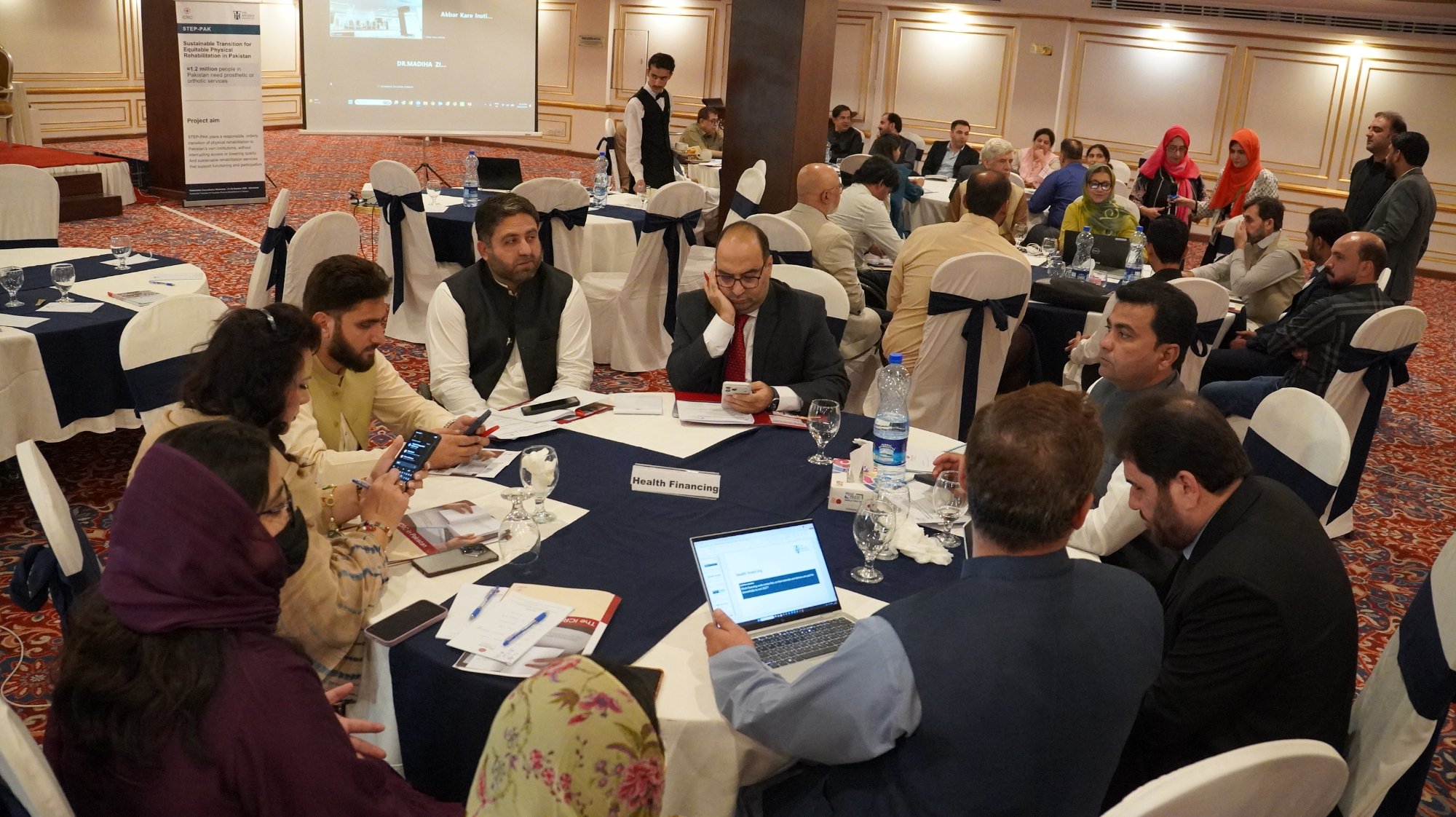
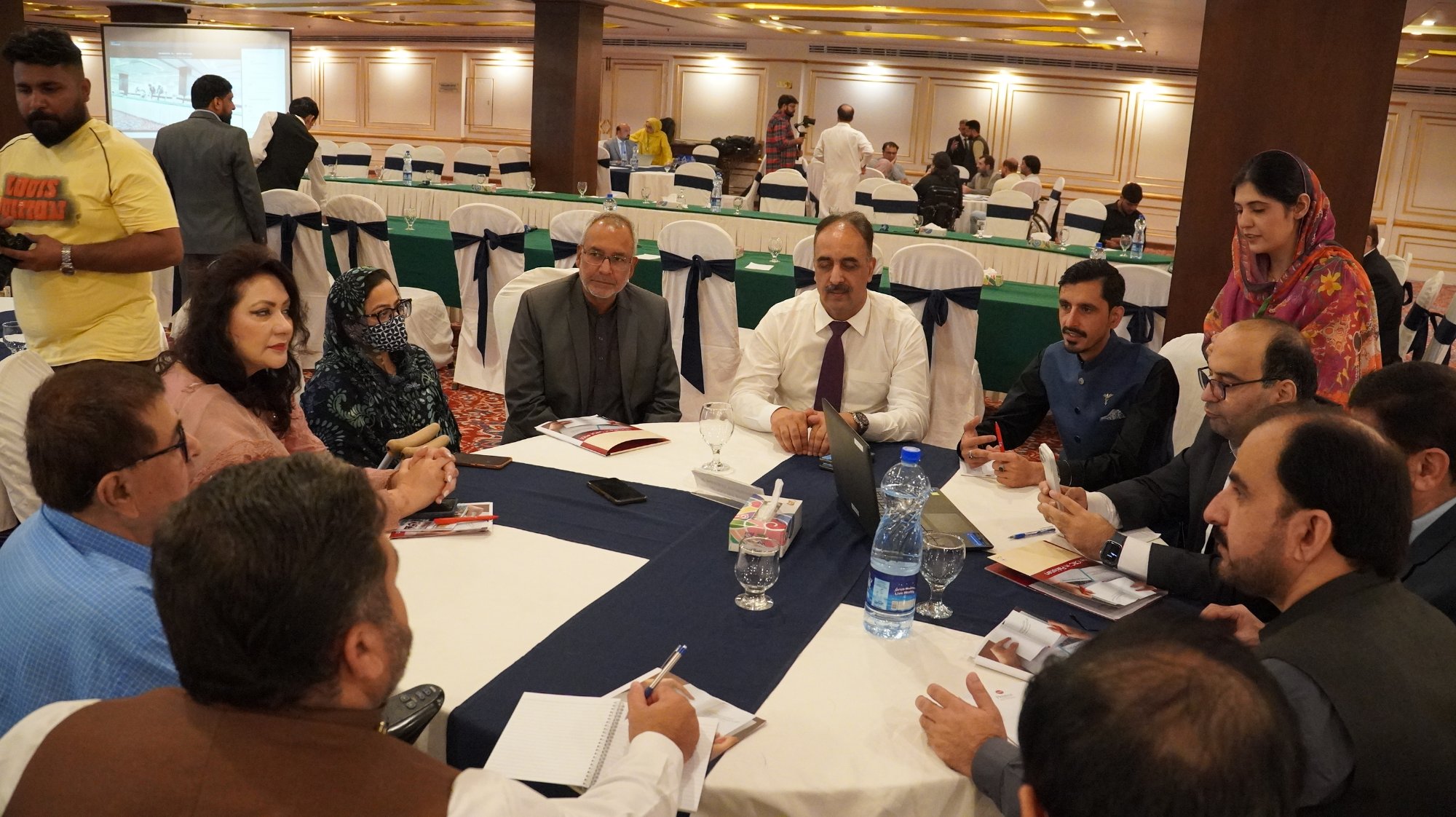
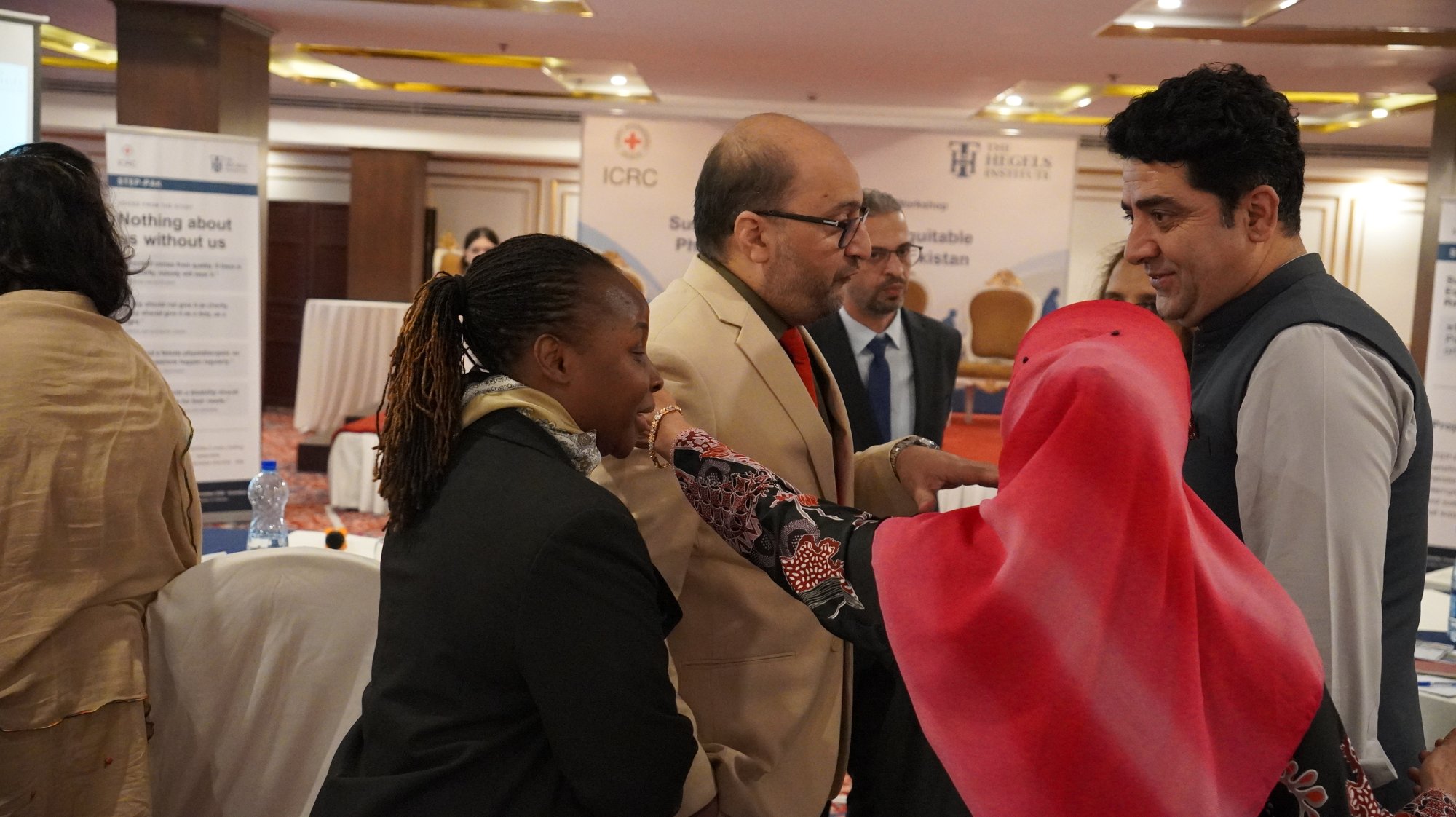
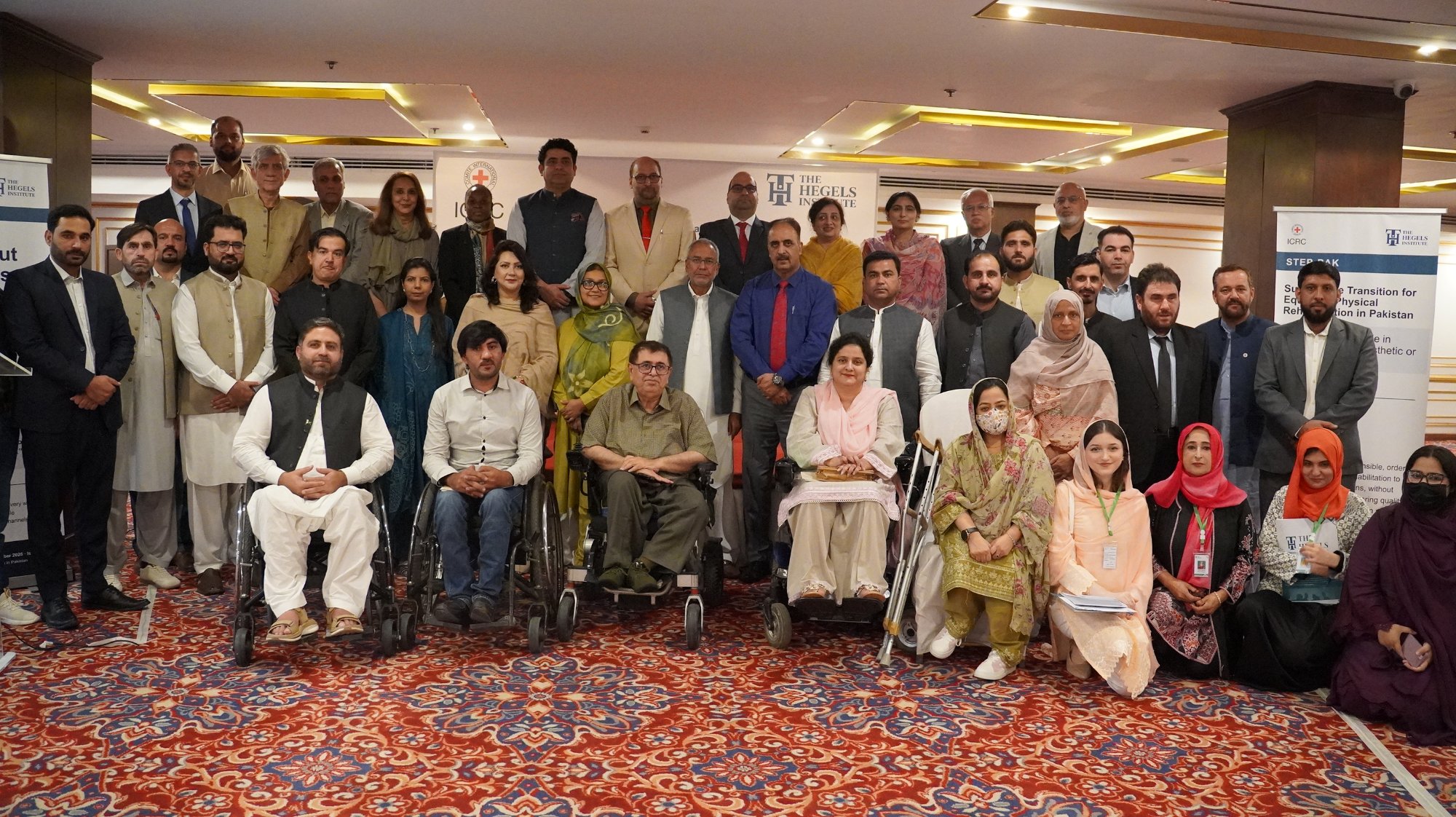
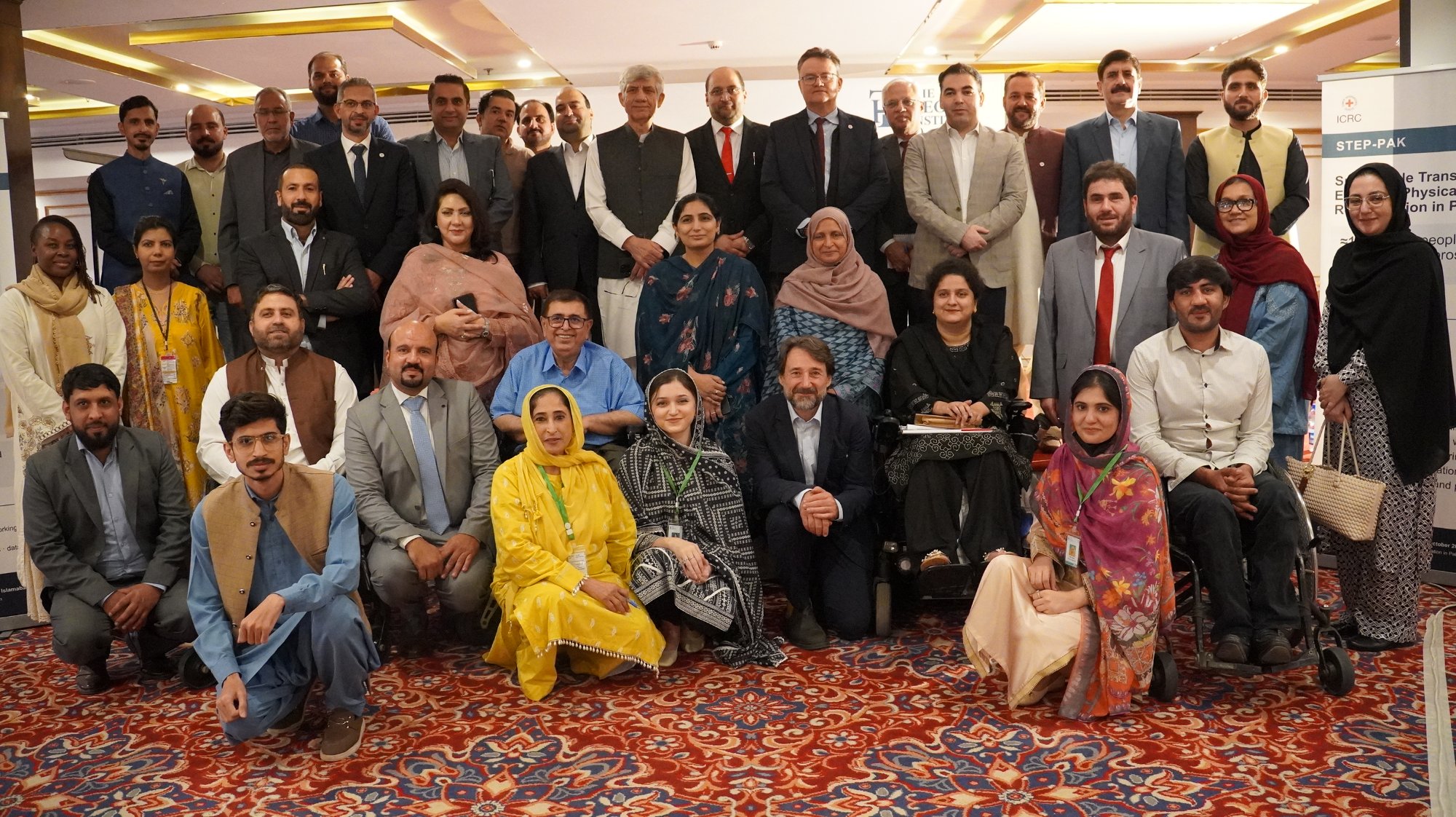
Islamabad, 22 October 2026. Physical rehabilitation in Pakistan can move from ICRC support to national ownership, but only through a gated, conditional transfer. This is the central finding of the STEP-PAK feasibility study, which national and provincial stakeholders reviewed and validated at a two-day workshop held by The Hegel Institute in partnership with the International Committee of the Red Cross (ICRC) on 21–22 October 2026, with a letter of support from the Ministry of National Health Services, Regulations and Coordination (MoNHSR&C).
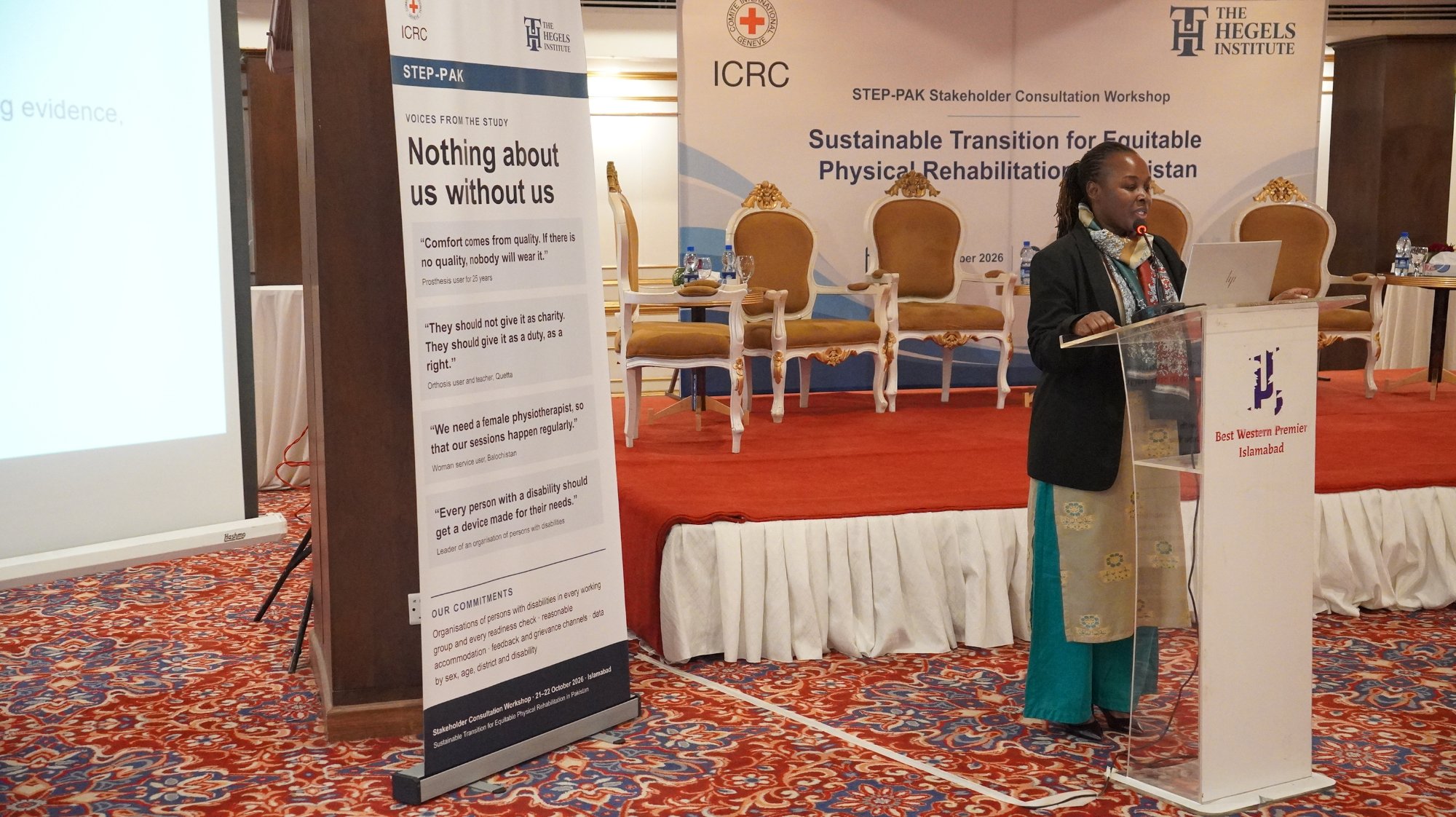
Participants came from federal and provincial health and social welfare departments, social health protection programmes, regulators, rehabilitation centres and organisations of persons with disabilities (OPDs). The Director General (Health), MoNHSR&C, addressed the opening session. The ICRC was represented by Mr Christoph Sutter, Head of Delegation in Pakistan; Ms Felicity Machoka, Health Coordinator; and Mr Ahmad Al-Mosa, Physical Rehabilitation Programme Manager. None of the study’s 44 findings was contradicted, and participants prioritised 31 actions across the six building blocks of the health system.
The ICRC: “Is this the way out for the ICRC? No.”
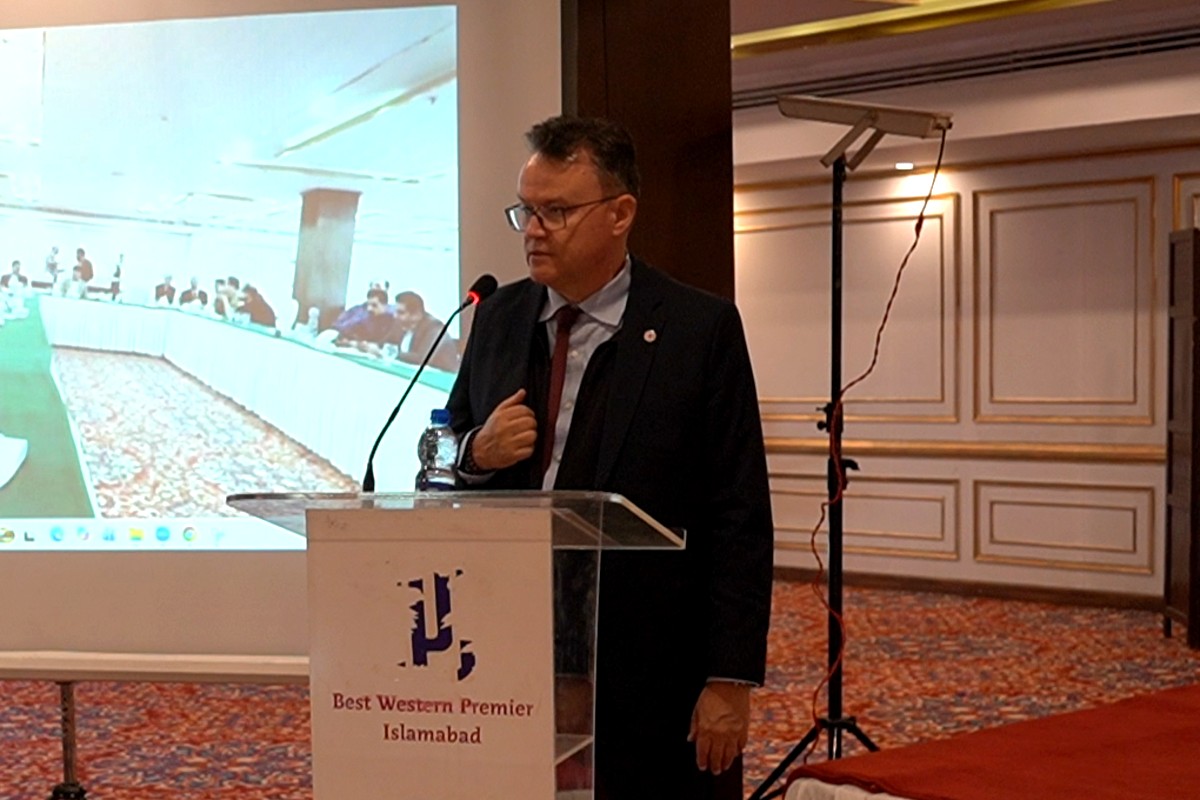
The ICRC Head of Delegation used his closing remarks to set out the organisation’s commitment to a shared, phased transition rather than an exit.
So, you know, when I arrived I heard somebody raising the question: is this the way out for the ICRC? No. It is our engagement, our ambition, together with the Hegels and all of you, to work together towards a sustainable future for physical rehabilitation services for people with disabilities in Pakistan.
Christoph Sutter, Head of Delegation, ICRC Pakistan
Mr Sutter credited the feasibility study with defining the agenda for the next phase:
The feasibility study that the ICRC has been engaged in together with the Hegels, and the discussions that have come out of this feasibility study, they have helped identify the building blocks and the questions that must now be resolved. And the outcome we seek is not simply a transfer of responsibilities; it is a credible, phased pathway towards Pakistani stewardship, financing and management, one that protects continuity, quality, affordability and equitable access throughout the transition.
Christoph Sutter
He named three priorities for 2027: translating the workshop’s recommendations into a sequenced, costed action plan with clear institutional leads and milestones; advancing provider readiness alongside the design of governance, financing, purchasing, supply and information arrangements; and ensuring that persons with disabilities continue to shape decisions. “Progress should be measured not only by devices delivered or responsibilities assigned,” he said, “but by whether people can obtain appropriate rehabilitation when they need it and participate more fully in family, education, work and community life.”
The ICRC is ready to collaborate with all of you to make this Pakistan transition-ready.
Christoph Sutter
About the study
The Sustainable Transition for Equitable Physical Rehabilitation in Pakistan (STEP-PAK) feasibility study was commissioned by the ICRC and led by Dr Sheraz Ahmad Khan, Principal Investigator, at The Hegel Institute. It assessed whether, and how, ICRC-supported physical rehabilitation can be integrated into Pakistan’s public financing and social health protection, and co-developed a phased transition model. The evidence combined about 60 interviews across major centres in three provinces and Azad Jammu and Kashmir, costing of four ICRC-supported centres in Khyber Pakhtunkhwa (KP), a survey of 237 users and caregivers, and the workshop itself.
What the study found
The transition is feasible, affordable and urgent. The institutions, workforce and providers exist, but the functions that hold the system together (materials financing, procurement, product quality assurance and coordination) are still performed largely by the ICRC, which has supported physical rehabilitation in Pakistan since 1981.
- Affordability is not the constraint. ICRC support to four KP centres was worth PKR 166 million in 2024, 0.06% of the KP health budget. Sustaining current output needs about PKR 159 million a year. What is missing is allocative priority and budget instruments to spend.
- Services contract when support ends without a successor. Lady Reading Hospital stopped prosthetic services, and output at the four KP centres fell 6% in FY2025-26.
- Need far exceeds supply. The four centres delivered about 4,370 prosthetic and orthotic (P&O) devices in FY2025-26, about 6% of KP’s estimated need.
- Users cannot close the gap. Almost a quarter of surveyed users have delayed or stopped treatment because of cost, and co-payments would cover only 5–8% of the requirement.
The way forward: transfer by gate, not by calendar
The study recommends that each centre and each ICRC function transfers only when a Steering Committee has verified that a gate has been passed. Materials would be financed through three instruments: a recurrent supply-side budget line, indexed grant-in-aid for statutory centres and a costed benefit package in social health protection programmes. The ICRC would keep its conflict core: early rehabilitation for the weapon-wounded and a protected referral route for conflict-affected people.
| Gate | Target | Conditions to pass |
|---|---|---|
| Gate 1: readiness verified | End 2026 | Provincial focal points and lead departments named; OPD seat with a funded capacity plan; a successor agreed for each ICRC function; costed P&O proposal submitted to social health protection programmes; bridging stock for Lady Reading Hospital and Landi Kotal; minimum dataset agreed |
| Gate 2: first cohort funded | End 2027 | Recurrent budget line and higher grant-in-aid for the first five centres; P&O in the federal and KP benefit packages; supply contracts with quality clauses; referral protocols |
| Gate 3: regulation and supply in place | 2029 | Statutes amended, including indexed grant-in-aid; national P&O reference standard adopted; validated tariff; P&O items on rate contracts; licensing piloted in Balochistan |
| Gate 4: sustained services | 2030 | Services, outcomes and equity held for 12 months after transfer, with no rise in out-of-pocket payment |
Voices from the workshop
On Day 2, Dr Anam Najam, consultant psychiatrist and disability inclusion advocate, joined Dr Sheraz Ahmad Khan for an unscripted conversation. Her 18 years of living with quadriplegia after a spinal cord injury tested the study’s findings against lived experience.
When someone sees you in the wheelchair, they just see that you cannot walk. But being not able to walk is the least of my problems.
Dr Anam Najam
It’s not the lack of knowledge. It’s not the lack of skills. It’s the lack of stewardship. And it’s the lack of clear responsibility.
Dr Anam Najam, on the trauma care she received after her injury
I have found no wheelchair prescriber in these 18 years of my journey.
Dr Anam Najam
The rehabilitation sector needs rehabilitation.
Dr Sheraz Ahmad Khan
The country is transition capable but not transition ready.
Dr Sheraz Ahmad Khan, summarising the study
If the certificate is saying Anam is disabled and she’s not fit for work, then I think the certificate is not fit for purpose.
Dr Sheraz Ahmad Khan, on disability certification
Next steps
The final report, with its phased roadmap, Theory of Change and results framework, has been prepared for ICRC review. Gate 1 conditions fall due by the end of 2026; if they are not met, ICRC support continues at its current level and the first cohort of centres is delayed.
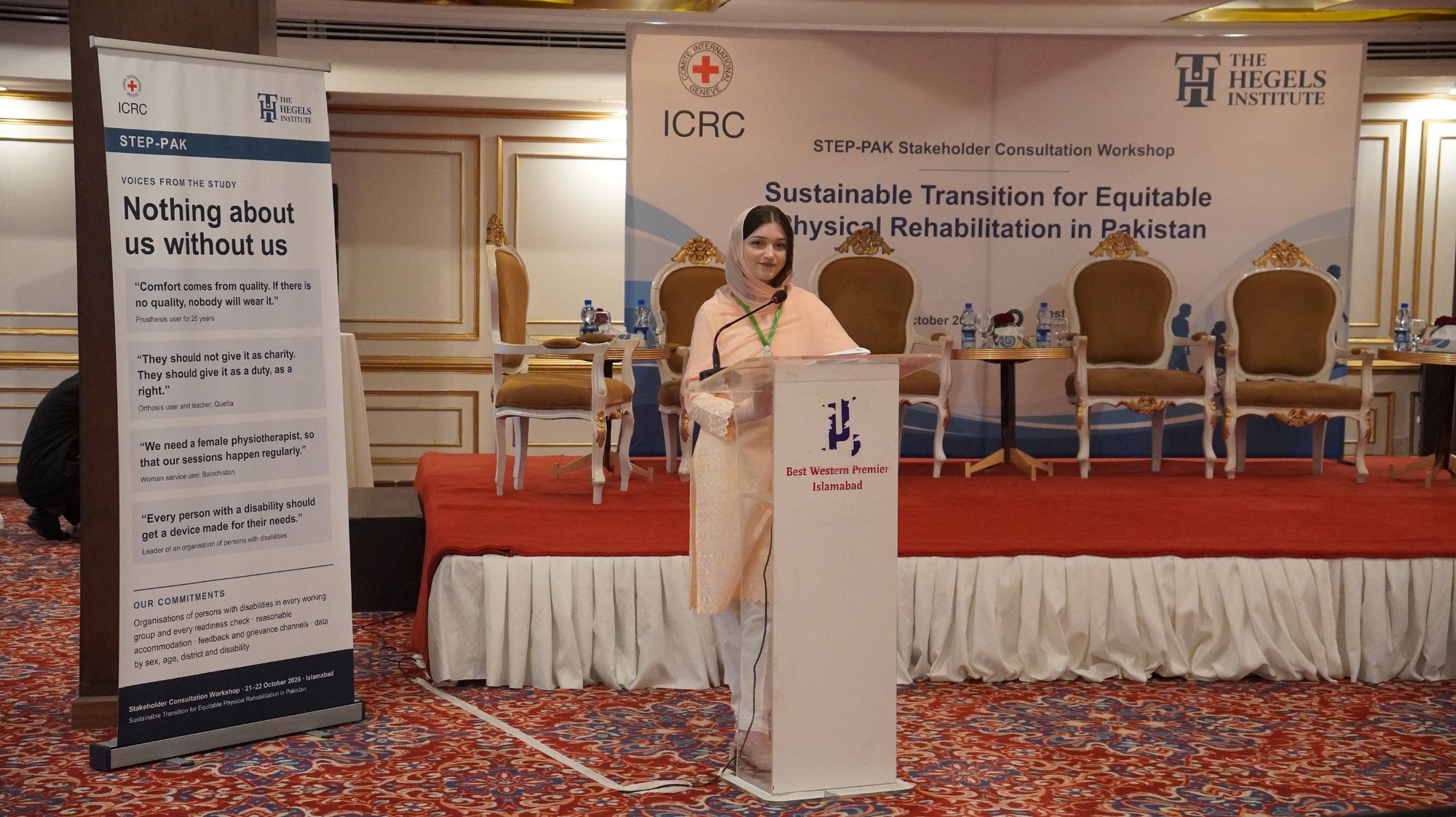
Photo gallery
About The Hegel Institute
The Hegel Institute is the research and policy arm of The Hegels (Private) Limited, Islamabad, working on health systems, healthcare financing and global health security.
